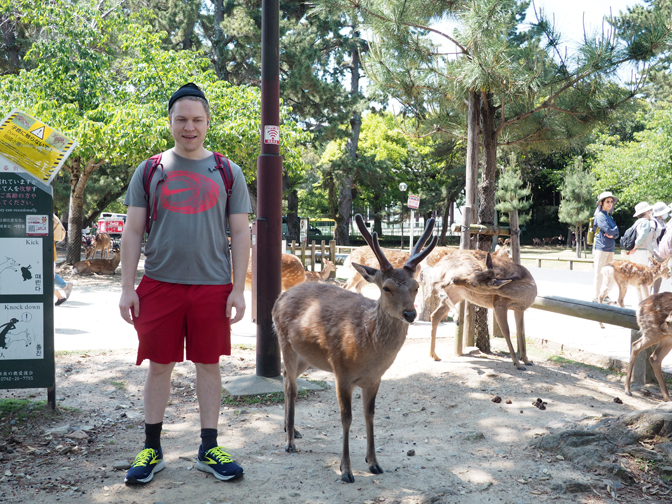
One morning while visiting Osaka, Peter and I arose early to take the express line train from Osaka to Nara, famous for its bowing deer, said to bow before you so you will give the deer food. However, the deer in Nara park tended to mob some people holding biscuits for them, and if the person was not quick enough to give a biscuit, the deer would bite the person to hurry her up. Some women would cry out and scurry away, only to have the deer eagerly follow. Some of the old deer still held to tradition, though, and would bow deeply for a treat.
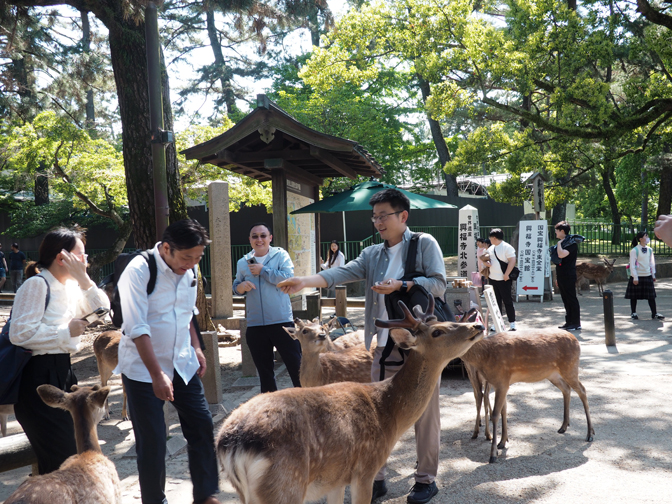
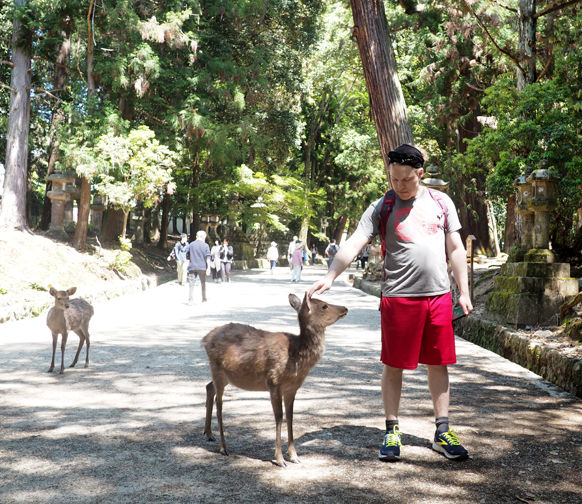
The deer on the grounds of Todairi Temple, were more sedate and some were skittish around people. One particular deer stood at the top of the tall wide stairs leading up to the temple, like a greeter, bowing to each person who bowed to the deer, whether they gave her a treat or not.
Todaiji Temple, first built in the eighth century, then rebuilt after it burned down in a Samurai war, and rebuilt yet again in the 1800s after it was destroyed in another war, is an enormous building, housing the largest bronze Buddha in Nara. This Buddha is a delight to behold.
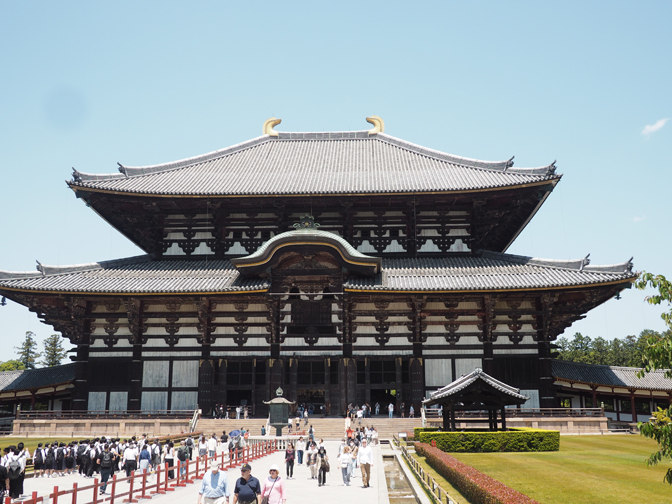
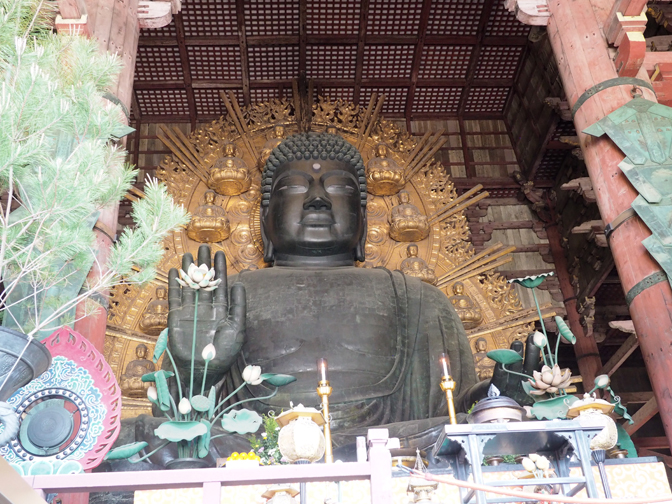
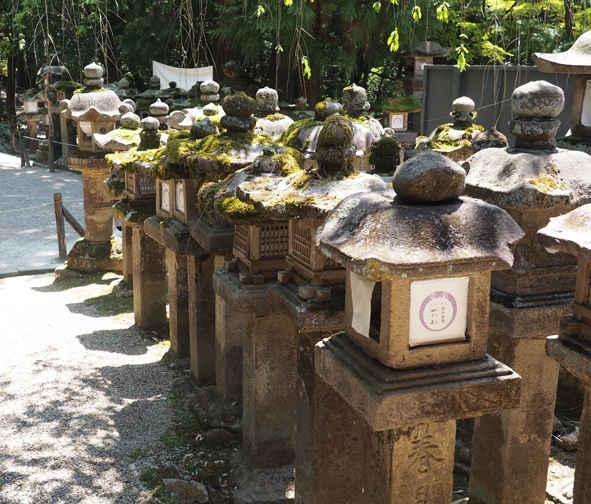
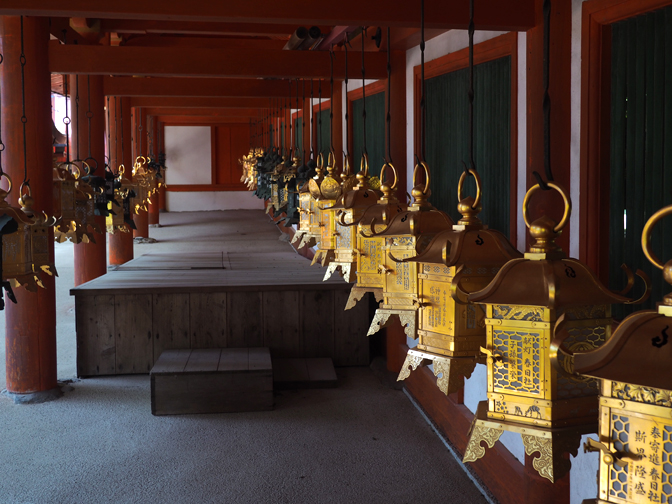
From Todaiji Temple, Peter and I walked to the Kasuga Taisha Shrine, the main Shinto shrine in Nara, founded in 758 A.D.
We shared our train to Nara with a group of school children on the way to visit the historic area.
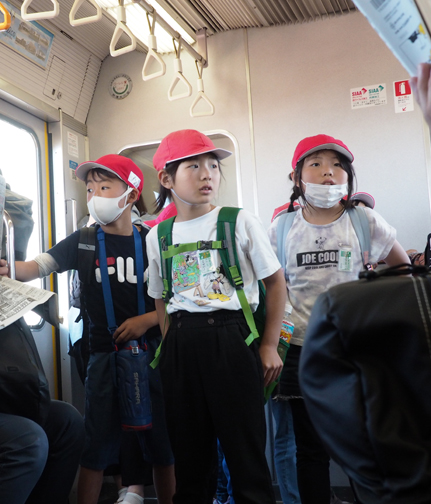
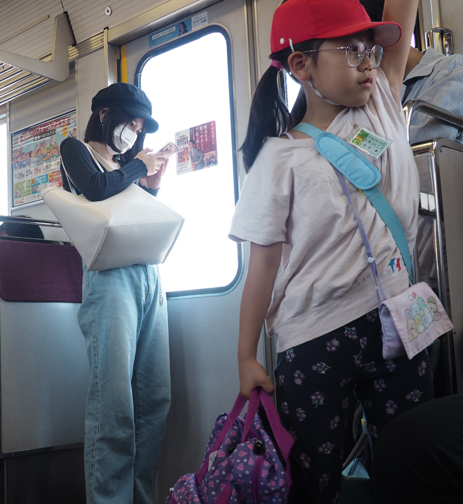
There were many groups of uniformed school children visiting the temple and shrines in this area. Periodically there would erupt from a group of boys in such groups hands raised in greeting and a shouted “Hello!” apparently in delight to spot Peter and me on whom they could practice their English. I engaged in a brief exchange with one such group, asking one of the boys “How are you?” to which he replied “I am hungry.” Then one of the girls asked me, “how are you?” to which I replied, “I am happy,” and the whole group enjoyed my reply. We then parted, pleased by our brief interaction.
We chanced upon a couple apparently having their engagement photos taken near one of the Temple outbuildings.
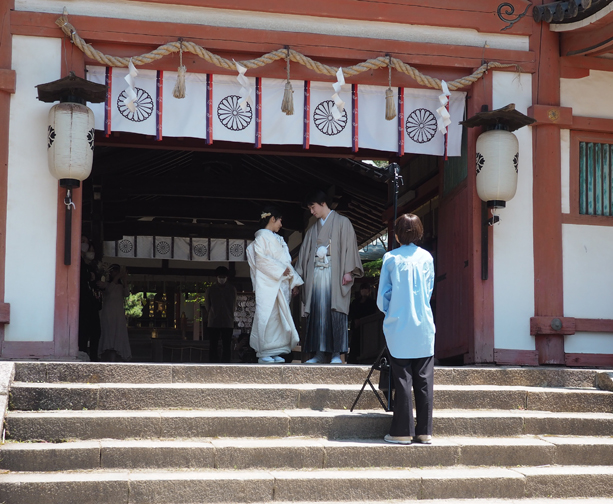
Next we visited Yoshikienn Garden. I very much enjoyed walking through this peaceful garden, observing how the gardeners had placed and tended to the plants to create a visually stunning display. We saw two gardeners pulling things out of an expansive moss garden. We looked into a traditional Japanese house on the premises with its straw mat covered floors and sliding partitions, most of them open and opened to the outside.
After visiting the garden, we strolled through Higashamuki shopping street, a covered alley shopping arcade to get to a mochi shop on Peter’s radar where we bought several of the soft, sweet, macha covered, plum paste filled delicacies. The shop faced a small street, and the crowd of people standing before the shop to watch the process of making mochi was so large that the shop employed a man with a red baton to loudly speak out and direct the people to move in and out of the street every time a car drove by. He switched to speaking in English when Peter and I and any other foreigners approached, “car coming, move away, car coming!”
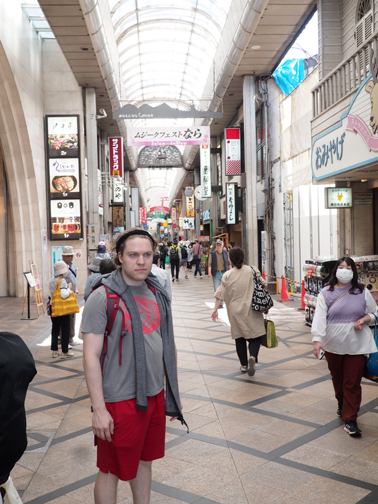
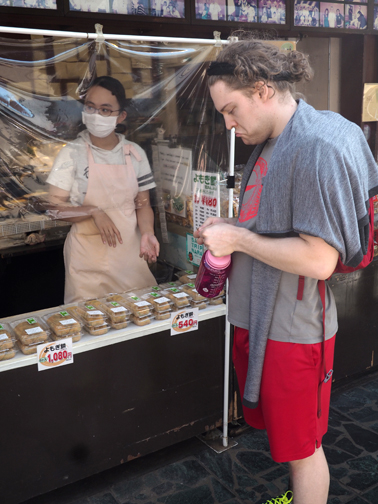
After enjoying our mochi, we walked back down the market street, stopping at a grocery store to marvel at the wares, and we picked up a few items at a 100 yen store within. At another shop, in which there were no English translations for any of the products, I picked up a package of what appears to be sweetened dried ginger. As Peter and I were pondering another item I held in my hand, one of the clerks came over and searched her phone for a translation, finally telling me that the product was potato, so I bought these potato chips, only to discover when Peter and I ate them later that the chips were sweet and not salty as I had expected them to be.
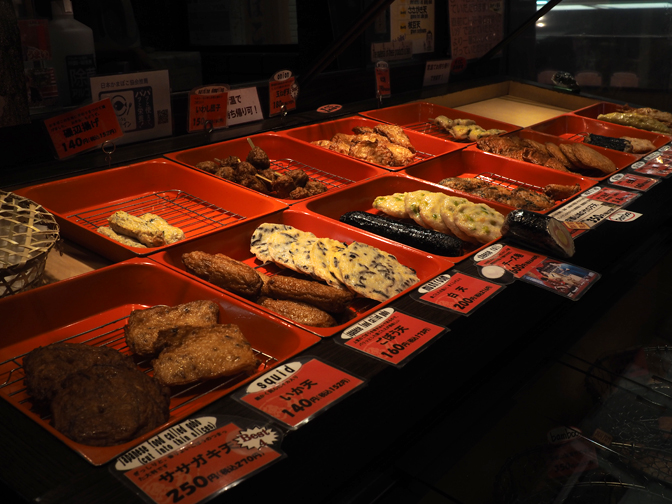
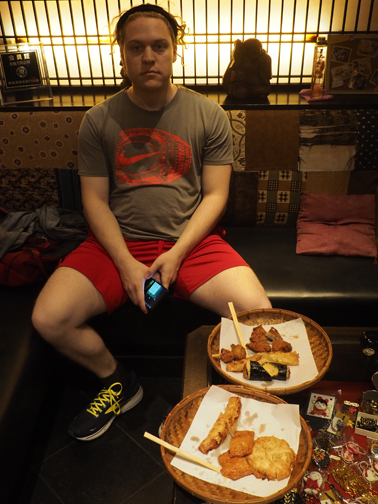
In another shop, Peter and I each picked up a wicker basket with a paper towel at the bottom and selected our items of choice from an array of options to eat before we boarded the train back to Osaka. I chose one flat patty with ginger in it, another with small shrimps, and a third item described as potato with butter. We indicated when we paid that we would eat the food while sitting on the couches in a small corner alcove in the shop, and the clerk took our choices into a back room to cut them up and then brought them to us to enjoy using the chopsticks provided in the corner alcove.
We then took the train back to Osaka and rested a bit before setting out to find a ramen shop. The place we found was interesting. The staff spoke no English (unlike most of the other places at which we ate), and yet, the sound system was playing reggae music in which the vocalists sang either in English or Jamaican. Every time a guest entered, the entire large staff of people would erupt with an enthusiastic flurry of words, presumably a greeting to their new patrons.
As with many of the restaurants we visited, we placed our order at an electronic kiosk at the door. First we entered our choices, after which I inserted the appropriate payment, and the machine disbursed our change and the ticket for our order. We then entered the restaurant and handed our ticket to the hostess who directed us to our table to wait for our food.
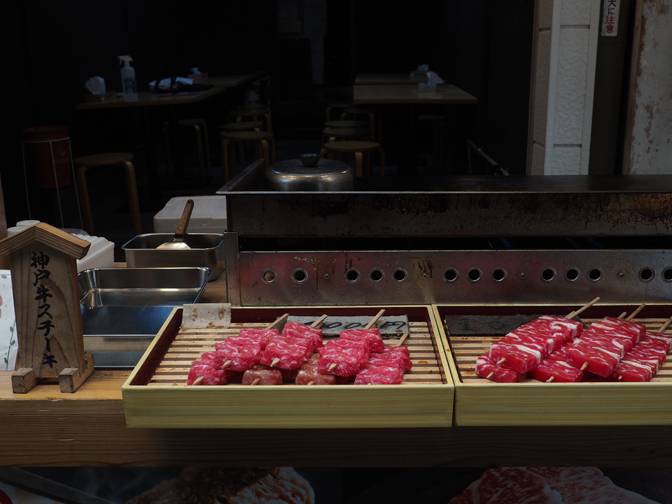
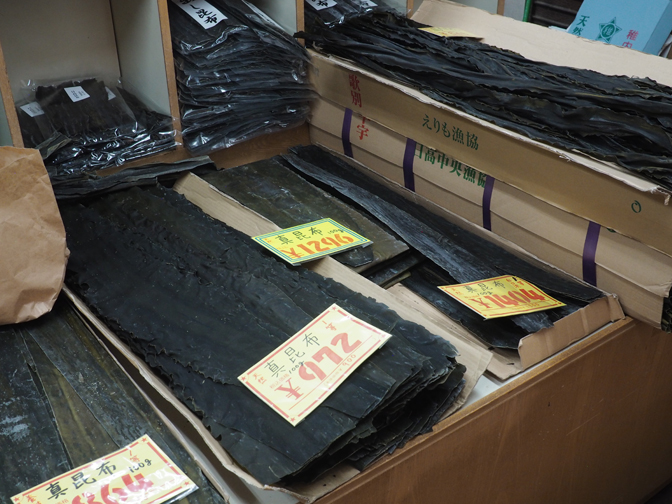
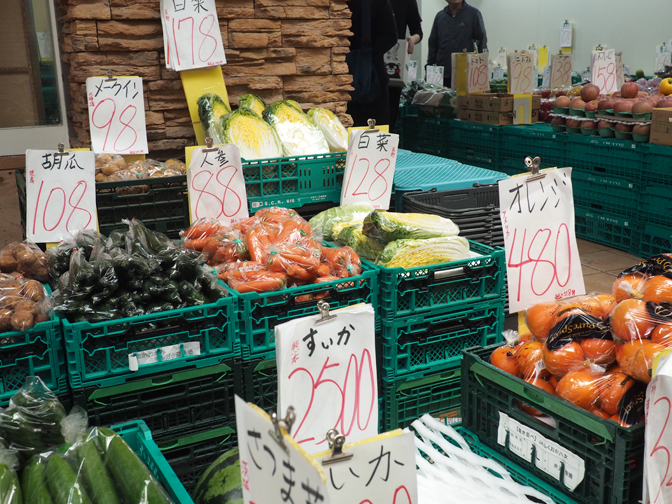
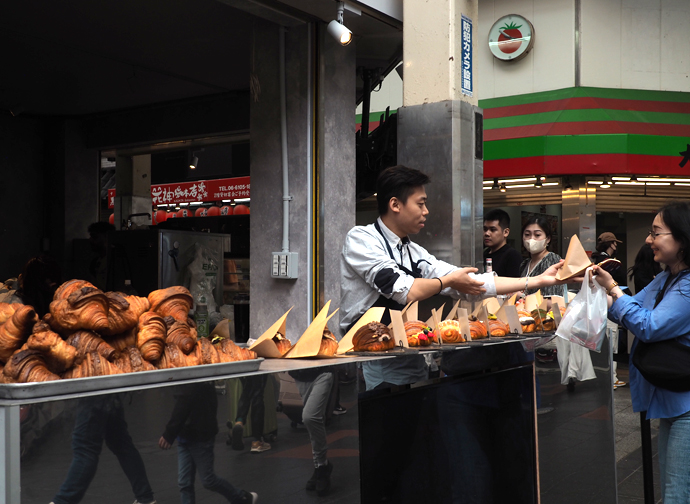
The next morning, back in Osaka, we visited Kuromon Market, which has been around for 200 years and is known as “Osaka’s kitchen.” We strolled the market ogling the stalls of the fish, beef, and vegetable vendors. We got a small skewer of beef at one vender and a fancy croissant at another.
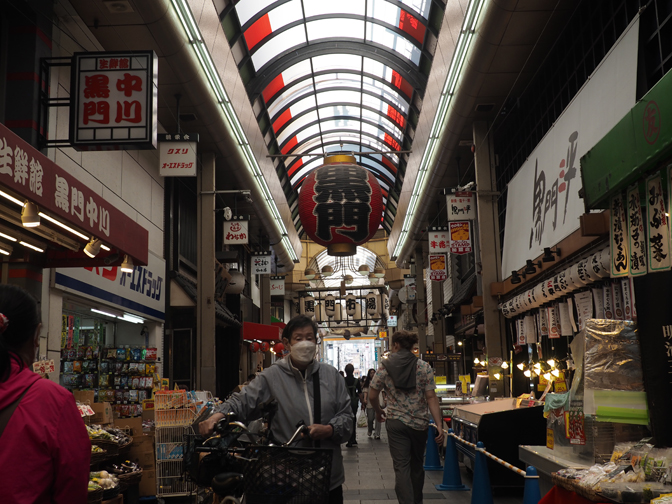
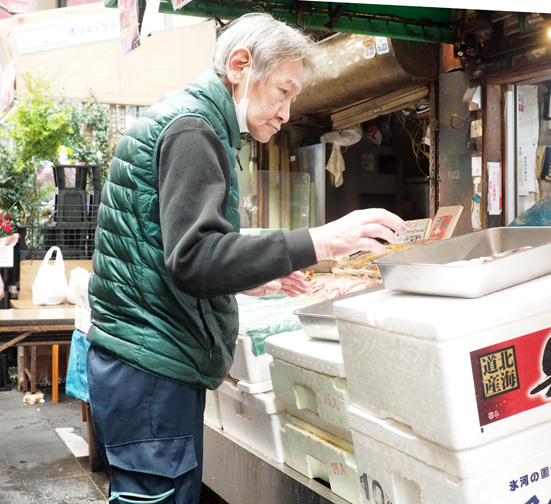
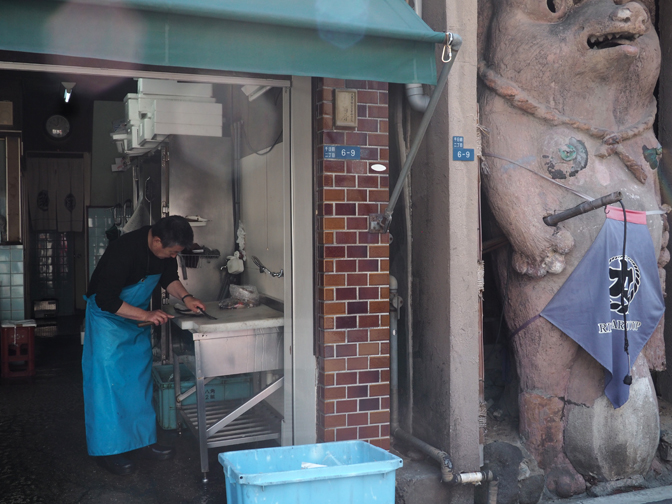
A fish vendor
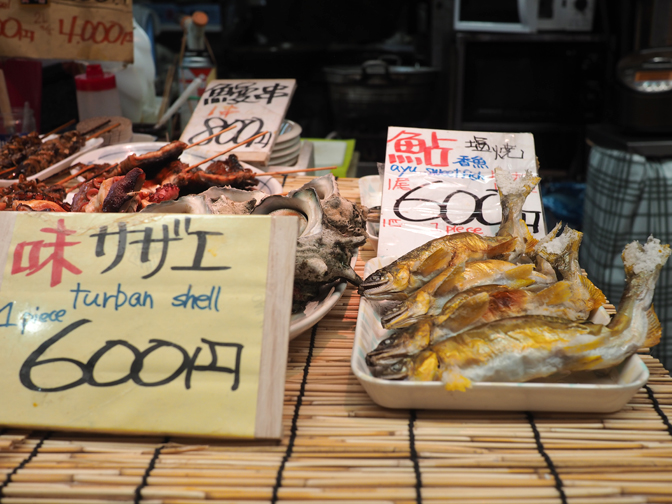
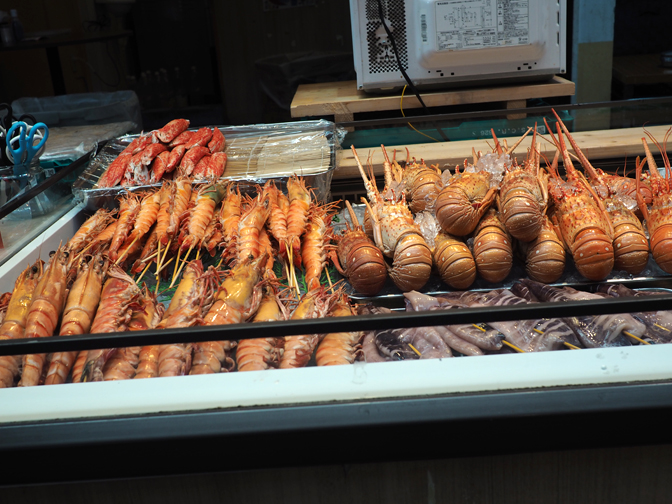
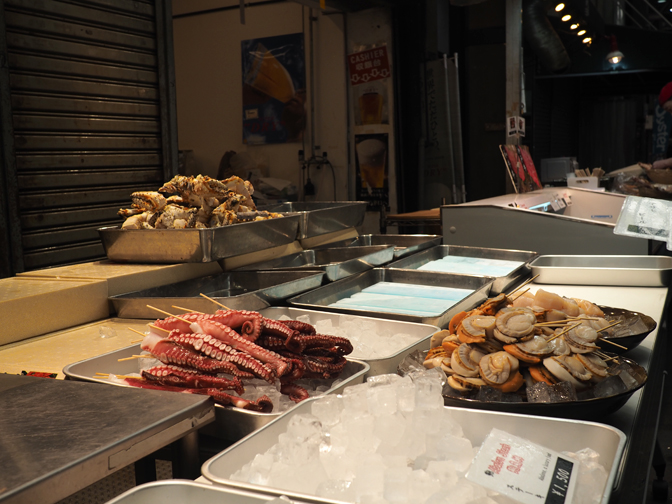
I then wandered a bit around the city taking pictures.
Our next destination was Kyoto. That visit is documented at Part 4 of this Travelogue.
Navigation Tip: You may click on the blue highlighted language >>> Part 4: Kyoto (or tap it with your finger on an iphone or ipad) to navigate to the next section.